
Revolutionizing Sports Metaverse with Secure Data Sharing and AI Integration

PixelPaddle continues to push boundaries in the Sports Metaverse by exploring cutting-edge technologies to enhance user experiences, data security, and efficiency. As part of this commitment, the team recently participated in the Secure Data Sharing Platform session, organized by Blockchain@UBC 2024 Research Talk. This insightful session, led by Dr. Ibrahim Tariq, Assistant Professor at the University of the Fraser Valley, explored advanced blockchain solutions for secure data sharing, particularly in healthcare and user authentication protocols. PixelPaddle has already incorporated Polygon, a “layer two” scaling solution that operates alongside the Ethereum blockchain, into its ecosystem. Polygon enables speedy transactions and low fees, making it a reliable choice for managing user data and transaction records in our platform. However, as innovators, we constantly seek excellence and evolution. The session by Blockchain@UBC provided new perspectives on healthcare data sharing protocols, reinforcing our commitment to empowering users with blockchain-based data storage and authentication mechanisms that are secure, transparent, and user-centric. The Role of AI in Optimizing User Data Transactions and Authentication PixelPaddle is integrating Artificial Intelligence (AI) into its data transaction and authentication processes to enhance security and optimize efficiency. AI algorithms are being employed to analyze patterns in user behavior, validate transactions in real-time, and flag anomalies that could indicate fraudulent activities. This integration not only boosts the reliability of data handling within the metaverse but also ensures a seamless experience for users. For instance, AI-driven authentication will allow secure and instant access to the platform while safeguarding sensitive information against unauthorized access. Enhancing Metaverse Experience with VR Gameplay and Health Tracking PixelPaddle’s Sports Metaverse, now available on Quest 3 Meta, is redefining how fans, athletes, and youth engage with cricket. Offering immersive VR gameplay experiences like wicketkeeping, bowling, batting, and other activities, the platform records users’ movements and efficiency in performing specific game tasks. These data points are vital for delivering personalized feedback and enhancing the gameplay experience. In addition to gaming, PixelPaddle is expanding its offerings to include health and fitness activities tailored to youth, fans, and professional athletes. By integrating AI and blockchain technologies, we ensure that health-related data, such as movement patterns and fitness metrics, are securely stored and accessible only to authorized users. This approach not only protects user privacy but also establishes trust within our growing community of metaverse enthusiasts. Exploring Blockchain for Healthcare Data Sharing and Beyond The session at Blockchain@UBC reinforced the potential of blockchain as a transformative tool for secure data sharing, particularly in the healthcare sector. As we aim to incorporate fitness and health-tracking features into our platform, understanding cutting-edge blockchain solutions will allow us to implement decentralized data storage and authentication protocols. These protocols empower users with full control over their personal data, enabling them to share information selectively while ensuring data integrity and privacy. Commitment to Learning and Innovation PixelPaddle’s participation in the Secure Data Sharing Platform session reflects our dedication to continuous learning and adopting innovative solutions. While Polygon remains our current choice for managing data transactions, we are actively exploring other blockchain frameworks that could offer enhanced scalability, security, and efficiency. By staying at the forefront of technological advancements, we aim to create a Sports Metaverse that is not only immersive but also secure and user-focused. A Future Built on Trust and Technology PixelPaddle’s vision is to revolutionize the way sports enthusiasts and athletes interact with technology. By combining AI-driven processes with blockchain solutions, we are creating a platform that seamlessly integrates gaming, health, and fitness activities while prioritizing data security and user empowerment. As we continue to innovate, our commitment remains steadfast: to deliver a metaverse experience that is immersive, secure, and transformative for all users.
PixelPaddle’s Commitment to Intellectual Property Protection and Growth

At PixelPaddle, we recognize that intellectual property (IP) is a cornerstone of innovation and a valuable asset in today’s competitive landscape. This is why we are committed to not only creating cutting-edge technology but also safeguarding our ideas and innovations as we expand into global markets. As part of our ongoing efforts to protect our intellectual property, we are thrilled to be exploring the resources offered by AccelerateIP, a program designed to support startups in BC, Yukon, Northwest Territories, and Nunavut. Led by New Ventures BC in collaboration with Innovate BC, AccelerateIP aims to help innovative companies like ours manage, protect, and leverage their IP through enhanced access to education, skills development, and financial support. PixelPaddle’s dedication to protecting its intellectual property is evident in our recent achievement: we’ve already secured our Copyright approval from Innovation, Science and Economic Development Canada (ISED). This marks a significant milestone in our journey to safeguard the technology-based interventions that power our Sports Metaverse, particularly in the domain of cricket data analysis and player performance. With our Copyright approval in hand, we demonstrate our seriousness and professionalism in protecting the innovations we bring to the market. However, we’re not stopping there. As we continue to grow and expand our footprint in both local and international markets, including Canada and North America, we are proactively learning how to secure further intellectual property rights and ensure the protection of our creative and technological assets. The recent session we attended provided crucial insights into how startups like ours can navigate the complexities of intellectual property protection. With the consultation and support of our co-founding members—including Mr. Anjum Khursheed (CFO), Mr. Abubakar (COO), Mr. Yasir Iqbal (CTO)—along with our legal and financial consultants, including our corporate lawyer and CPA, we are excited to pursue further guidance from the AccelerateIP program. We are planning to take full advantage of the one-on-one consultations offered by the program to deepen our understanding of IP registration processes and ensure that we’re eligible to file for additional IP protections that align with our business objectives. This proactive approach to IP protection will not only fortify the security of our ideas but also elevate PixelPaddle’s reputation as a serious, professional company that is committed to securing its innovations. By doing so, we will continue to build trust with our stakeholders and position ourselves as a leader in the technology space, especially as we work to grow our platform both locally and internationally. The AccelerateIP program represents an invaluable opportunity for PixelPaddle, and we look forward to leveraging its resources to protect and grow our intellectual assets as we move forward in our journey.
Exploreing Cutting-Edge AI at NeurIPS 2024, Vancouver, BC

The Conference on Neural Information Processing Systems (NeurIPS) is one of the world’s premier gatherings for machine learning, artificial intelligence, and related fields. Held annually, this conference attracts global experts, researchers, and innovators shaping the future of AI. To stay at the forefront of technology and enhance its expertise in AI deployment on advanced platforms, the PixelPaddle team attended the Thirty-Eighth Annual NeurIPS Conference, held at the Vancouver Convention Center from December 10 to December 15, 2024. Engaging with Cutting-Edge AI Innovations PixelPaddle immersed itself in a range of panels, workshops, and discussions covering topics like generative AI for numeric predictions, decentralized AI models, and advanced computing infrastructures. Key highlights of the conference included: Panel Discussions: Insightful sessions with global AI thought leaders exploring innovations and challenges in AI development. Expo Talks: Engaging presentations showcasing state-of-the-art AI tools and platforms. Workshops and Social Events: Opportunities to deepen technical knowledge while connecting with fellow innovators. Key Sessions of Interest Several sessions stood out for their relevance to PixelPaddle’s vision of leveraging AI for sports engagement and SaaS solutions. These included presentations by: IBM AI Alliance: Focusing on collaborative AI innovations for real-world applications. Bittensor: Exploring decentralized machine learning models and their potential for scalability. Akash.Network: Highlighting decentralized cloud solutions optimized for AI workloads. Morpheus Decentralized AI: Addressing the benefits of secure and private AI systems. Naptha AI: Delving into AI-driven predictive analytics and performance optimization. Building Connections for Growth The conference provided an excellent platform for networking and collaboration, enabling the PixelPaddle team to forge valuable connections with industry leaders, researchers, and fellow entrepreneurs. These interactions are expected to play a crucial role in advancing PixelPaddle’s mission of creating innovative and efficient solutions. PixelPaddle’s participation in NeurIPS 2024 reinforced its commitment to staying ahead in the AI landscape. The team left the conference inspired, equipped with new insights, and eager to explore collaborative opportunities for startup growth and technological maturity. As PixelPaddle continues to innovate and expand, its presence at such prestigious events underscores its dedication to leveraging cutting-edge AI technologies for the benefit of sports enthusiasts, businesses, and the broader tech community.
PixelPaddle’s CEO Shares Insights with University of Auckland Researcher on Blockchain in the Sports Metaverse

At PixelPaddle, we’ve always believed in innovation, collaboration, and transparency. Recently, our CEO, Meer Anwar, was honored to be invited by Ms. Memoona Zareen, a researcher at the prestigious University of Auckland, New Zealand, to share his insights about PixelPaddle’s journey and its role in the blockchain-powered sports metaverse. Memoona’s research focuses on the challenges and struggles within blockchain ecosystems, making this an incredible opportunity to contribute to the global dialogue on this transformative technology. The Vision Behind PixelPaddle Memoona began by commending the vision and execution of PixelPaddle, highlighting the platform’s impressive focus on engaging users through innovative sports metaverse experiences. She noted the website’s emphasis on contributions to the Canadian tech ecosystem and inquired about PixelPaddle’s role in the B2B space, its network of collaborators, and its position within the competitive blockchain ecosystem. Meer Anwar explained that while PixelPaddle predominantly serves a B2C audience, its foundational partnerships with blockchain developers, AI experts, and tech collaborators play a crucial role in its development. These collaborations ensure that PixelPaddle remains at the forefront of innovation, blending cutting-edge AI and blockchain technologies to redefine how users interact with sports in a virtual environment. Challenges in Blockchain Integration Memoona’s research centers around the challenges and struggles of blockchain ecosystems, such as adoption, scalability, compliance, and digitalization. Meer Anwar shared three key challenges PixelPaddle encountered during its journey: Adoption and Awareness: The initial challenge was educating the market about the benefits of blockchain in the sports metaverse. Many users were unfamiliar with how blockchain could enhance transparency, ownership, and engagement in a virtual sports environment. PixelPaddle tackled this through targeted educational campaigns, live demonstrations, and engaging user experiences. Scalability: Scaling the platform to accommodate a growing user base while maintaining high performance was another major hurdle. Blockchain’s inherent limitations, such as transaction speeds and costs, posed challenges. To address this, PixelPaddle integrated Layer-2 solutions and collaborated with blockchain infrastructure providers to optimize scalability without compromising user experience. Compliance and Ecosystem Alignment: Navigating the regulatory landscape and aligning with ecosystem stakeholders was a continuous process. Ensuring compliance with global and local regulations required collaboration with legal experts and policymakers, while fostering trust among collaborators and competitors in the ecosystem demanded transparency and consistent communication. Overcoming the Adoption-Scalability Loop Memoona’s research highlighted a common challenge faced by blockchain projects: the adoption-scalability loop problem, where projects struggle to scale profitably after proof-of-concept (POC) success. Meer Anwar acknowledged this pattern and shared how PixelPaddle strategically broke free from it: Phased Rollouts: By gradually introducing features and scaling user engagement, PixelPaddle avoided overwhelming its infrastructure and ensured consistent user satisfaction. Community Building: Fostering a vibrant community of early adopters and enthusiasts helped drive organic growth and adoption. Collaborative Innovation: Partnering with blockchain developers and AI experts ensured that scalability challenges were addressed collaboratively, leveraging the best available technologies. The Future of Blockchain in the Sports Metaverse Looking ahead, Meer Anwar shared his vision for the integration of blockchain in the sports metaverse. He emphasized that the technology’s potential lies in its ability to democratize access, empower users with true ownership of their virtual assets, and create decentralized economies within metaverses. PixelPaddle’s roadmap includes: Expanding partnerships with sports leagues and brands to create unique virtual experiences. Enhancing interoperability with other blockchain ecosystems to foster a more connected metaverse. Investing in AI-driven personalization to deliver tailored experiences for every user. The interview was a thought-provoking exchange of ideas that underscored the transformative potential of blockchain in reshaping industries. Memoona’s research and insights provided valuable perspectives on overcoming challenges and scaling innovations within blockchain ecosystems. PixelPaddle remains committed to pushing the boundaries of what’s possible in the sports metaverse, and we look forward to continuing to share our journey with collaborators, researchers, and enthusiasts worldwide. Together, we can shape the future of immersive and interactive experiences powered by AI and blockchain.
Scaling to Global Markets: Key Takeaways from Session with Export Development Canada
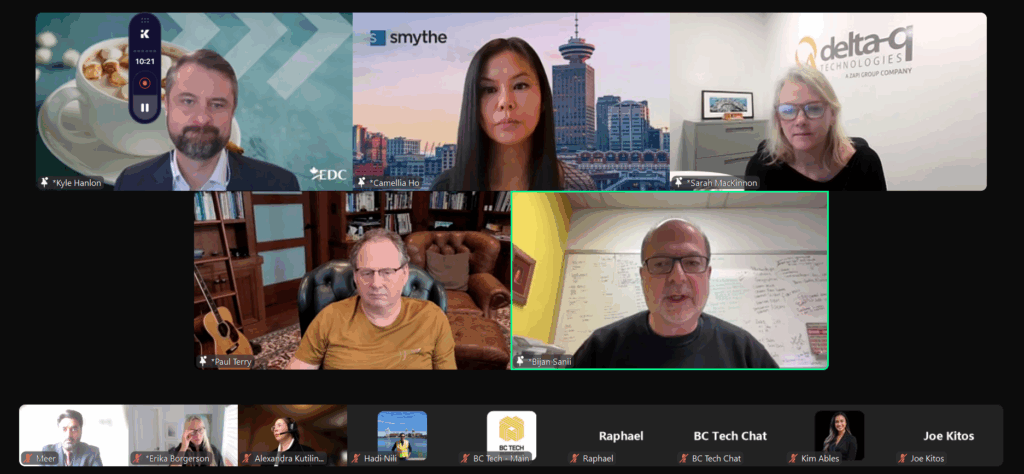
At PixelPaddle, we are always looking for opportunities to refine our Go to Market strategy and take our platform to new heights, both locally and internationally. Recently, the team had the privilege of attending an insightful session hosted by Export Development Canada (EDC), moderated by Kyle Hanlon (Regional Director, EDC, Mid Market Business). This interactive session featured a distinguished panel of experts who shared their wealth of knowledge on scaling businesses to international markets. Experts Leading the Discussion The session brought together an amazing lineup of speakers with extensive experience in international business growth: Sarah MacKinnon, CEO of Delta-q Technologies Bijan Sanii, President & CEO of INETCO Systems Limited Camellia Ho, Partner at Smythe LLP Paul Terry, CEO of Photonic Inc. The panelists shared invaluable insights that are crucial for any business looking to expand and succeed in foreign markets, especially for startups and entrepreneurs in British Columbia. Key Takeaways from the Session As a growing startup that is keen on scaling our platform internationally, the PixelPaddle team took away several key lessons from the session. Here are the most important strategies to keep in mind when planning your international expansion: 1. Market Research & Selection: Successful international expansion hinges on thorough market research. Identify potential markets by analyzing factors like market size, growth potential, competitive landscape, consumer behavior, and trade agreements. This research guides your market entry strategy, whether it’s direct exporting, indirect exporting, licensing, franchising, or foreign direct investment. 2. Product/Service Adaptation: Adapting your offerings to the local market is crucial. This includes considering cultural sensitivities, translating marketing materials, ensuring compliance with local regulations and standards, and adjusting packaging to suit local preferences and transportation needs. 3. Logistics & Operations: Efficient logistics and operations are paramount for international success. This involves selecting reliable and cost-effective shipping methods, navigating customs clearance procedures, establishing efficient supply chains, and determining appropriate payment terms to mitigate risks. 4. Marketing & Sales: Developing a targeted international marketing strategy is essential. This includes utilizing local media and advertising channels, building relationships with local partners, providing excellent customer service in the local language and time zone, and increasing brand awareness through trade shows and other events. 5. Government Resources: Leveraging government resources can significantly enhance your international expansion efforts. The Trade Commissioner Service (TCS) provides valuable market research, trade leads, and expert advice. Export Development Canada (EDC) offers financing, insurance, and bonding solutions. Additionally, provincial and territorial export agencies provide support programs and resources tailored to the needs of Canadian businesses. 6. Risk Management: International business involves inherent risks. Implementing strategies to mitigate the impact of currency fluctuations, political and economic risks, and legal and regulatory challenges is crucial. Conducting thorough risk assessments and developing contingency plans are essential for long-term success. 7. Key Considerations for Canadian Businesses: Canadian businesses possess unique strengths. Leveraging Canada’s strong reputation for quality, innovation, and sustainability can provide a competitive advantage. Focusing on niche markets where Canadian companies excel and building strong, long-term relationships with international partners and customers are key to successful international expansion. The insights shared during the session with Export Development Canada have provided the PixelPaddle team with a clearer roadmap for scaling our platform both locally and internationally. Whether it’s conducting thorough market research, adapting our products for local markets, or leveraging government resources, these strategies will play an integral role in helping us navigate the complexities of international expansion. As we move forward, we’re excited to apply these lessons to continue our growth and build meaningful connections in global markets. PixelPaddle remains committed to learning, evolving, and expanding its reach to create innovative solutions for the sports metaverse—especially in the realm of cricket analytics and player performance. We look forward to the next phase of our journey and the exciting opportunities that lie ahead!
Empowering the Future of Sports: Lessons Learned at the #OnePieceLabs Universities Tour

At the recent #OnePieceLabs Universities Tour’s last leg, held on November 17, 2024, the PixelPaddle team had the invaluable opportunity to engage with a vibrant community of students, builders, and blockchain enthusiasts at Simon Fraser University (#SFU). The event served as a crucial platform for our sports metaverse startup to deepen our understanding of the rapidly evolving Web3 landscape. The keynote by Eddie Li, Founder of #AEON Protocol, highlighted the importance of bridging Web2 and Web3, a concept that resonates with our mission at PixelPaddle. As we strive to create immersive sports experiences in the metaverse, learning from industry pioneers like Eddie is essential for guiding our strategic direction. The panel discussions featured thought leaders such as Sophia Zhao from #AlumniVentures, Bill Lin from #AmberGroup, Srinjoy Chakraborty from #OffChainLabs, and Shuyu Wang from #TARSProtocol. Their insights underscored how Web3 innovation is not only transforming industries globally but also opening up limitless career opportunities across various domains. For a startup like PixelPaddle, which aims to integrate gaming and sports in a decentralized environment, these perspectives are invaluable. Attending such events allows PixelPaddle to: Gain Insights: By engaging with experts, we gain critical insights into market trends, technological advancements, and potential challenges, which inform our product development and strategic planning. Network with Industry Leaders: Building connections with established professionals and other startups helps us foster partnerships, explore collaboration opportunities, and gain mentorship. Showcase Our Vision: Participating in discussions about the future of Web3 enables us to share our vision for the sports metaverse, attract interest, and gather feedback from potential users and stakeholders. Inspire Innovation: Exposure to innovative ideas and approaches fuels our creativity and inspires new features that enhance user engagement and experience within our platform. Events like the #OnePieceLabs Universities Tour are crucial for startups like PixelPaddle. They not only provide essential knowledge and networking opportunities but also help us remain at the forefront of the Web3 revolution. We look forward to leveraging the insights gained from this event to drive our mission of shaping the future of sports in the metaverse.
Monad Madness! Yet, is it mad enough to handle PixelPaddle craziness?

PixelPaddle team attended the online session by MonadLabs Expert Mr. Mussadiq Lalazai, moderated by Prof. Victoria Lemieux (Head of Blockchain@UBC). Monad’s features make it a strong candidate for powering the PixelPaddle Sports Metaverse, particularly with the need for high-performance and scalable infrastructure to manage and process large amounts of cricket-related data, player performance analytics, and predictive models. Here’s how Monad could benefit the platform: 1. 10,000 TPS (Transactions per Second) Scalability and Speed: The ability to handle 10,000 TPS is crucial for a sports metaverse that processes a huge volume of data in real-time, such as player performance metrics, statistics, and live match updates. This ensures that even with millions of users or vast amounts of data from cricket games, the platform remains responsive and can scale without performance degradation. Real-Time Analytics: Fast transaction speeds allow the platform to deliver predictive models and analysis in real-time, which is essential for providing up-to-date player performance insights, game predictions, and betting opportunities based on data processed instantly. 2. Single-Slot Finality Instant Confirmation: The single-slot finality ensures that transactions are finalized quickly, minimizing delays in data processing and decision-making. In a sports metaverse, where accuracy and speed are paramount, this feature enables immediate updates to player stats, game results, and the seamless progression of events without waiting for multiple confirmations. Trustworthy Analytics: With single-slot finality, users can trust the data and analytics generated by the platform, ensuring that they are based on the most recent and validated information without risk of rollback. 3. Low-Hardware Requirements Accessibility and Decentralization: The low hardware requirements of Monad make it possible for more nodes to participate in the network, which leads to a more decentralized system. This is beneficial for the PixelPaddle Sports Metaverse as it ensures that anyone can join the ecosystem and participate in the data analytics process or even contribute data for cricket analytics without the need for specialized or expensive hardware. Cost-Effective for Users: As more users, developers, and startups within the cricket ecosystem access the platform with consumer-grade hardware, the cost of participating in the system decreases, leading to more widespread adoption and innovation. 4. Full EVM Bytecode Compatibility EVM Ecosystem Integration: Monad’s full EVM compatibility means that PixelPaddle can seamlessly integrate with existing Ethereum-based tools, libraries, and decentralized applications (dApps). This is valuable for incorporating smart contracts, DeFi elements (e.g., tokenized player assets or prediction markets), and other blockchain-based services without needing to reinvent the wheel. Leveraging Established Tools: Developers can continue to use well-established Ethereum development frameworks (e.g., Truffle, Hardhat) and access Ethereum’s vast ecosystem of decentralized finance, NFT standards, and other tools. This allows PixelPaddle to focus on the unique aspects of cricket analysis and gaming while taking advantage of the EVM-based solutions for scalability and security. 5. 1000x Faster than Ethereum Efficiency and Performance: The significant improvement in speed compared to Ethereum means that the PixelPaddle Sports Metaverse can process large amounts of cricket data and player performance metrics at a fraction of the time it would take on traditional platforms like Ethereum. This leads to a better user experience, as users can quickly access updated player stats, analyze match predictions, and participate in interactive gaming experiences without delays. Support for Complex Calculations: Sports analytics and predictive models often involve complex calculations and simulations based on historical data. Monad’s speed allows these models to run efficiently, providing users with faster insights into player performance, game outcomes, and betting scenarios. 6. Consumer-Grade Hardware for Decentralization Enhanced Decentralization: By lowering the hardware barrier for node operators, Monad enables greater participation in the network from various stakeholders, including users, developers, and startups. This decentralization strengthens the security and trustworthiness of the PixelPaddle Sports Metaverse while promoting community-driven growth and innovation. Sustainability: With lower hardware requirements, the platform can scale while keeping energy consumption and operational costs in check, making it more sustainable in the long term. Monad’s attributes—high transaction throughput, fast finality, EVM compatibility, low hardware requirements, and enhanced scalability—align well with the needs of the PixelPaddle Sports Metaverse. By leveraging these features, PixelPaddle can expand its infrastructure, process vast amounts of cricket data in real-time, support advanced analytics and predictive models, and provide a seamless, cost-effective, and decentralized platform for users and developers. This would not only help enhance user experiences but also enable scalability and long-term growth in the rapidly evolving sports metaverse ecosystem. As team, we are evaluating the platform in detail with the support of Monad team, either migration of our platform would bring any tangible results in efficiency and user experience.
Unity Developer/s (multiple)
Job Title: Unity Developer – Sports Metaverse Platform development & eCommerce IntegrationLocation: Vancouver, BC (Flexible Remote Options Available)Employment Type: Full-Time / Part-time Position Overview: PixelPaddle, an innovative platform at the forefront of the Sports Metaverse with integrated FIAT and cryptocurrency transactions, is seeking a skilled Unity Developer to join our team. This role is essential to creating and optimizing immersive interactive experiences within Unity, incorporating advanced financial elements, and delivering a high-quality, engaging experience to our users. The ideal candidate will have extensive experience in Unity development, real-time interaction, and eCommerce integrations, along with a strong understanding of how to blend interactive elements with seamless financial functionalities. Key Responsibilities: Unity Development FIAT and Crypto Integration Real-Time Interaction Cross-Functional Collaboration Qualifications: What We Offer: How to apply: Apply in confidence using the form below, applications will be accepted on a rolling basis until position is filled. Join PixelPaddle and be part of an industry-leading team at the convergence of sports, blockchain, and the metaverse. This role provides an exciting opportunity to innovate and impact the future of interactive digital experiences. If you’re passionate about Unity development and eager to push the boundaries of what’s possible in the Sports Metaverse, we’d love to hear from you!
Content Writer
Job Title: Content Writer (Consultant – Part Time)Location: Vancouver, BC (Flexible Remote Options)Employment Type: Part-Time (Consultant) Position Overview: PixelPaddle, a pioneering Sports Metaverse platform dedicated to delivering immersive, sports-based digital experiences, is seeking a talented Content Writer to join our team on a part-time consultancy basis. This role is integral to crafting PixelPaddle’s brand narrative and ensuring our audience is engaged and informed through compelling content. The ideal candidate will bring strong storytelling skills, creativity, and a passion for the interactive entertainment industry, helping to communicate PixelPaddle’s vision, product features, and updates. Key Responsibilities: Content Creation SEO Optimization Brand Consistency Content Editing and Proofreading Industry Research Qualifications: Benefits: How to apply: Apply in confidence using the form below, applications will be accepted on a rolling basis until position is filled. Join PixelPaddle and be part of an industry-leading team at the convergence of sports, blockchain, and the metaverse. This role provides an exciting opportunity to innovate and impact the future of interactive digital experiences. If you’re passionate about digital Story Telling and eager to push the boundaries of what’s possible in the Sports Metaverse, we’d love to hear from you!
Tokenized Team Ownership: How Blockchain Could Democratize Sports Teams in the Metaverse
Introduction: The Convergence of Blockchain, Sports, and the Metaverse The digital revolution has spurred a new era for sports and entertainment, with emerging technologies offering fans unprecedented access to their favorite teams. Blockchain, with its ability to tokenize assets, combined with the immersive world of Metaverse, is changing the way sports teams operate and engage with fans. Tokenized team ownership offers an interesting proposition: it democratizes the ownership model, allowing fans to play an active role in the financial and operational aspects of sports teams within the Metaverse. The concept promises to redefine fan interaction and increase community involvement through decentralized ownership. The concept of tokenized team ownership Tokenized ownership refers to dividing an asset into smaller, tradable digital units on the blockchain. In the context of sports teams, tokenization allows fans to purchase partial ownership in a team, allowing for collective decision-making and shared financial benefits. This not only makes ownership more accessible but also facilitates an investment model where the interests of fans and teams are more closely aligned. Imagine a scenario where the fans are not just spectators but real stakeholders in the team’s success. Tokenization brings this idea to life by allowing fans to hold digital tokens that represent partial ownership of a sports team. These tokens provide voting rights, profits from team profits, and access to certain decisions such as team management, merchandise releases, and even sponsorship deals. Blockchain Technology is the Backbone of Tokenization Blockchain is the underlying technology enabling tokenized team ownership. Key features such as transparency, security, and immutability are critical to building trust in this proprietary model. By recording every transaction and token allocation on a decentralized ledger, blockchain prevents fraud, ensures transparency, and allows fans to track their investments. Tokenized ownership relies on smart contracts which are automated contracts encoded on the blockchain. These contracts automate processes, such as dividend distribution, voting, and token transfers while streamlining the complex administrative aspects of team ownership. For example, a fan who owns a token can receive an automatic payment if the team wins, all without the need for an intermediary. Democratizing Team Ownership: A New Fan Paradigm In the traditional model of sports ownership, only wealthy investors and institutions can participate in sports teams. This exclusion often alienates fans from the decision-making process and financial rewards associated with team success. Tokenization disrupts this model, allowing everyday fans to become stakeholders. Democratizing team ownership fosters a deeper sense of loyalty and community. Fans holding tokens feel personally invested in their team’s success, resulting in higher levels of engagement and support. This model not only empowers fans but also enables teams to access new revenue streams by selling tokens and diversifying their fan base. The economic potential here is vast, as millions of fans around the world can collectively invest in their favorite teams, creating a financially stable and highly engaged community. Metaverse’s Role in Enhancing Tokenized Team Ownership The Metaverse, a digital universe that combines elements of Augmented Reality (AR) and Virtual Reality (VR), provides the perfect environment for the development of sports ownership. Within the Metaverse, sports teams can build virtual stadiums, host events, and organize interactive fan experiences that replicate the thrill of live games. It extends the utility of ownership tokens by giving fans exclusive access to virtual events, locker room experiences, and other unique interactions. For example, token holders can receive invitations to virtual team meetings, get early access to limited-edition digital collectibles, or display personalized avatars on stadium digital screens. Through these experiences, tokenized ownership becomes more than just an investment. It represents lifestyle and active, immersive participation. Potential benefits for fans, teams, and investors For fans: Increased access and influence: Fans gain voting rights and decision-making power, allowing them to influence the direction of their team. Financial Incentives: Through dividends and token appreciation, fans can enjoy financial rewards when their team performs well. Exclusive Experiences: Token holders can access unique virtual events, merchandise, and fan experiences in both Metaverse and the real world. For teams: New revenue streams: Teams can monetize fan engagement by offering tokens, creating a sustainable revenue stream. Loyal fan base: Ownership fosters a deep emotional connection, which makes fans more loyal and engaged. Innovative Marketing Opportunities: Tokenized adoption is a unique branding and marketing opportunity in the digital and virtual realms that opens the door to steps. For Investors: High Growth Potential: The convergence of blockchain, sports, and the metaverse is an emerging market with rapid growth potential. Diversified Investment Portfolio: Investors can add a new asset class to their portfolio, mixing sports, digital real estate, and blockchain. Long-term engagement: Investing in tokenized sports teams is more than financial. It promises long-term community and inclusion. Potential challenges and considerations While tokenized team ownership offers promising opportunities, several challenges and regulatory considerations remain. Regulatory Compliance: Sports teams must comply with securities regulations to avoid legal ramifications. Token sales may be classified as securities, subject to strict rules. Market Volatility: Token prices may fluctuate based on team performance, economic factors, or player transfers, resulting in financial risk to token holders. Fan Expectations: With growing influence come expectations. Managing the fanbase’s expectations to maintain harmony, especially about decision-making power, will be critical. Case studies and examples. Some teams and organizations have already started exploring blockchain and tokenization. Examples of blockchain-based fan engagement include Socios.com, which offers fan tokens for teams such as FC Barcelona and Juventus. These tokens allow fans to participate in trivia and earn rewards, providing a glimpse into the future of tokenized team ownership. While these initiatives are in their early stages, they demonstrate blockchain’s potential to transform fan interactions and ownership structures. The Future of Tokenized Team Ownership in the Metaverse The convergence of blockchain, tokenization, and the metaverse signals a transformative period for sports and fan engagement. Tokenized team ownership could fundamentally change the interaction between fans, teams, and investors, creating a more inclusive and democratic model for team governance. As blockchain technology advances, we may see a future where